
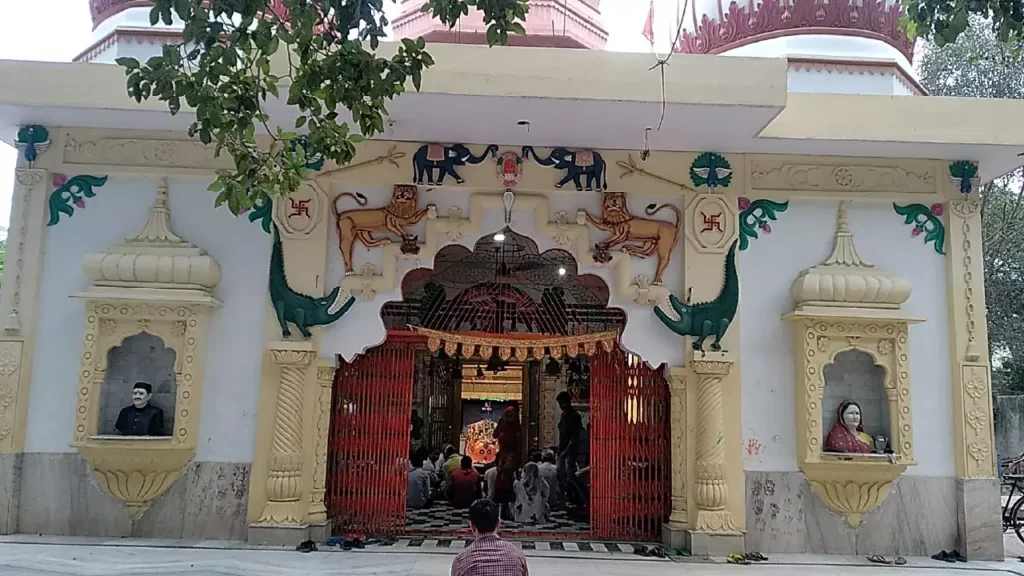
Shaktipeeth
Vrindavan
Shri Chamunda Devi Temple
- Devi
- Devi Uma
- Bhairava
- Bhutesh
- Place
- Masani, Uttar Pradesh, India
Upa Shaktipeeth
Shri Dharma Hari Temple (Bhairava Seat) / Mata Annapurna Mandir (Ram Janmabhoomi Complex)
127, Ram Mandir Rd, near Ayodhya Railway Staion, near Hanuman ghadi ramkot, सीखवाल नगर, Sai Nagar, Ayodhya, Uttar Pradesh 224123
The listed Annapurna and Dharma-Hari sites lie within Ayodhya's sacred landscape near Ramkot. Regional tradition links them with an Ayodhya Shakti Peetha, but the exact historical temple identification remains uncertain.
The listed Ayodhya entry combines Mata Annapurna worship in the Ramkot or Ram Janmabhoomi sacred area with Shri Dharma Hari as the associated Bhairava seat. Both belong to Ayodhya’s broad pilgrimage landscape, which contains temples connected with Rama, Sita, Shiva and numerous forms of the Goddess. However, public documentation does not securely establish a single ancient Shakti Peetha temple corresponding exactly to the combined modern listing, so the identification must be described cautiously.
The Peetha is recorded as Ayodhya, with Ayodhye and Saketa as alternate names. According to the tradition used by this database, Sati’s necklace or neck ornament, kantha-hara, fell here. The Goddess is Annapurna and the associated Bhairava is Harihara, also named Dharma-Hari. The precise historical location and the relationship between the Annapurna and Dharma Hari sites are not uniform across available accounts. The entry should preserve the textual pairing without implying that one verified monument contains every element of the tradition.
Navratri is the main Goddess festival relevant to the entry. Ayodhya’s wider pilgrimage circuit receives especially large attendance around Ram Navami, although that celebration centres on the birth of Rama rather than specifically on Annapurna worship. This site is best presented as a regional Peetha mapping embedded within Ayodhya’s much larger sacred geography. Any future architectural, historical or ritual claims should be added only when supported by temple management or authoritative local documentation.
Ayodhya tradition associates Sati's necklace or neck ornament, kantha-hara, with the Peetha and names Annapurna with Bhairava Harihara or Dharma-Hari. The Ram Janmabhoomi-area identification is a later regional mapping, and the precise historical temple location is not established uniformly across sources.
1. For the dteails of Peetha, Body parts, Devi, Bhairava we primarily used the book The Shakta Pithas by Dr. Dines Chandra Sircar (D. C. Sircar), and secondaryly used the book 108 Divya Shaktipeethas by Banwari Lal Kanchhal. 2. This Shakti Peetha is listed among the 26 Upapithas mentioned in the Shivacharita. 3. Banwari Lal Kanchhal, in his book 108 Divya Shaktipeethas, identifies this temple/place and. D. C. Sircar, in The Shakta Pithas, both lists this place as an Upapitha. 4. This: Mentioned in the extended lists of the Shivacharita / Shivacharitram. While mainstream tradition associates the Kantha-hara with the Maihar temple in Madhya Pradesh, the Shivacharita structurally places this unique spiritual matrix (Annapurna-Harihara) within the sacred geography of Ayodhya.
Shaktipeeth
Shri Chamunda Devi Temple
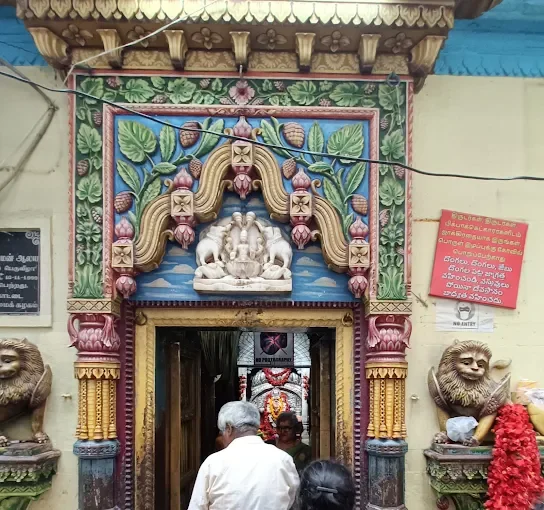
Shaktipeeth
Shri Vishalakshi Mata Shaktipeeth Temple

Shaktipeeth
Maa Vindhyavasini Temple

Samshaktipeeth
Shaktipeeth Mata Mukteshwari Temple
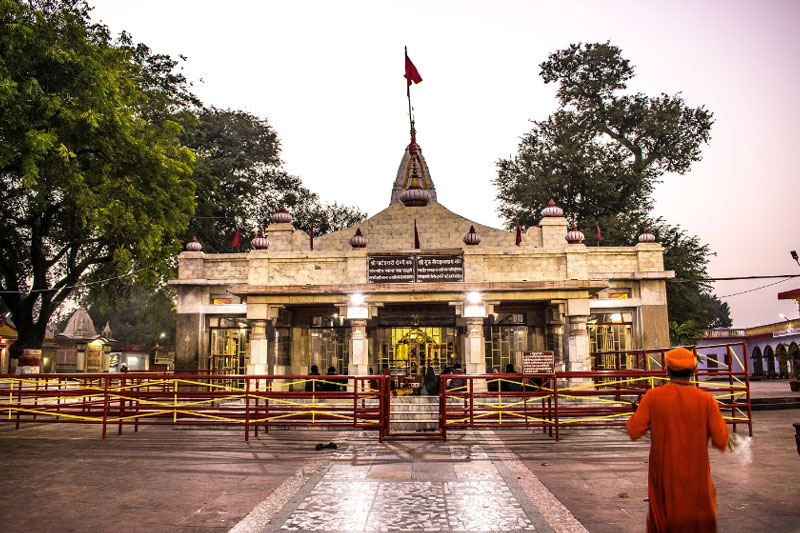
Samshaktipeeth
Devi patan Temple,Tulsipur
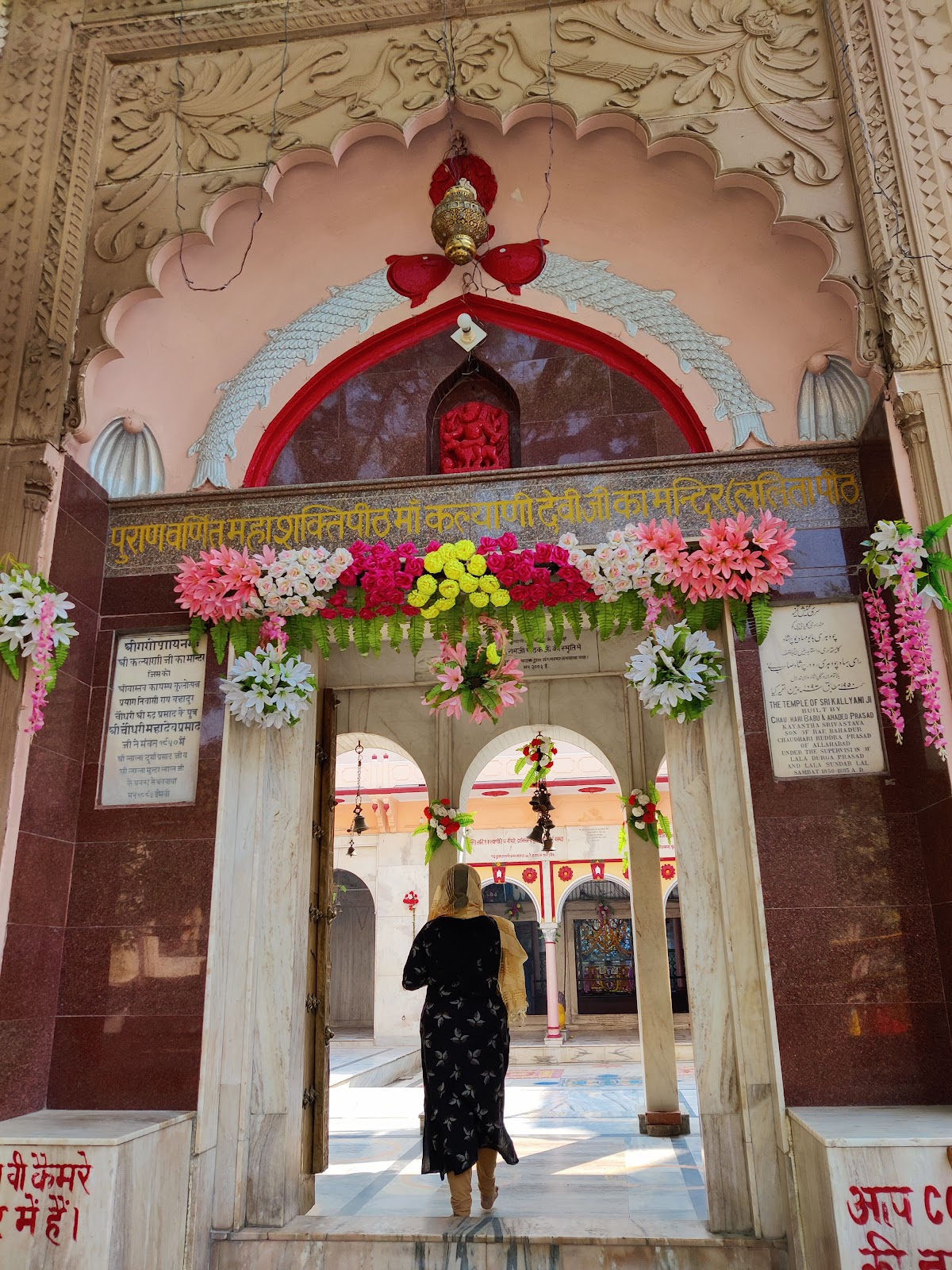
Upa Shaktipeeth
Maa Kalyani Devi Shaktipeeth Mandir
Upa Shaktipeeth
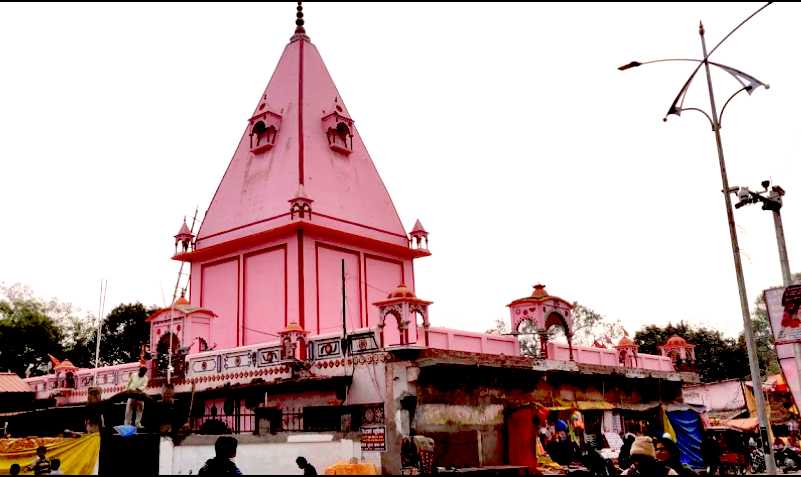
Alop Shankari Devi Shakti Peeth Mandir

Upa Shaktipeeth
Rajarajeshwari Shaktipeeth / Sangam Shaktipeeth
Upa Shaktipeeth
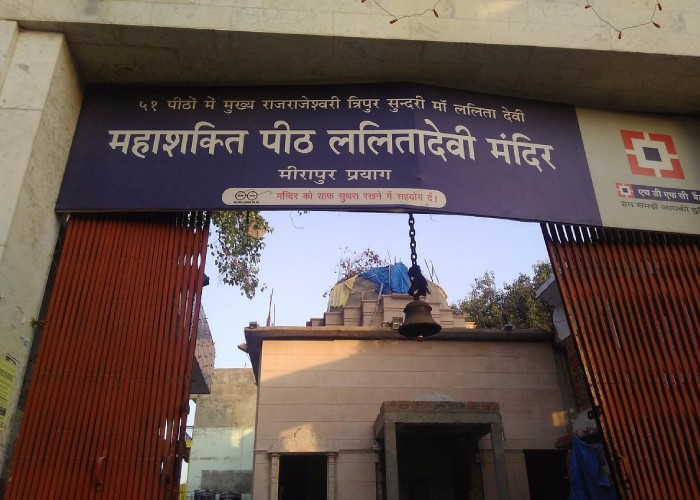
Lalita Devi Mandir